Our environmental activities at Ferrara
We work on the remediation of surface matrices and groundwater, carrying out trial activities with our partners and adopting innovative technologies.

A remediation to relaunch Ferrara
Ferrara at a glance
 Location: Italy, Emilia-Romagna
 Start of the environmental interventions: 2002
Ferrara past and present
Site history.
Environmental activities begin at the Ferrara site
Environmental activities began with a Programme Agreement on the Industrial and Technological Hub among co-located companies, the ministry of Economic Development, local authorities and trade unions.
Remediation begins with the transfer of Montedison assets to Enichem
Following the failed Enimont operation, the hub assets still belonging to Montedison passed to Enichem.
Progressive divestment and transfer of activities
In 1982 the polyethylene business branch passed to Anic, in 1983 the polypropylene supply chain went to Himont (Montedison-Hercules JV) and the ammonia, urea and fertilisers production to Norsk Hydro.
Italy’s first petrochemical complex
The plant was acquired by Montecatini, which built a cracking unit and a cycle of derivatives such as polyethylene, polystyrene, ethylene oxide, polypropylene, and elastomers.
Establishment of the Ferrara site
Plant activities began with the start-up of a synthetic rubber production facility by the Società Anonima Italiana Gomma sintetica.
Our activities at Ferrara
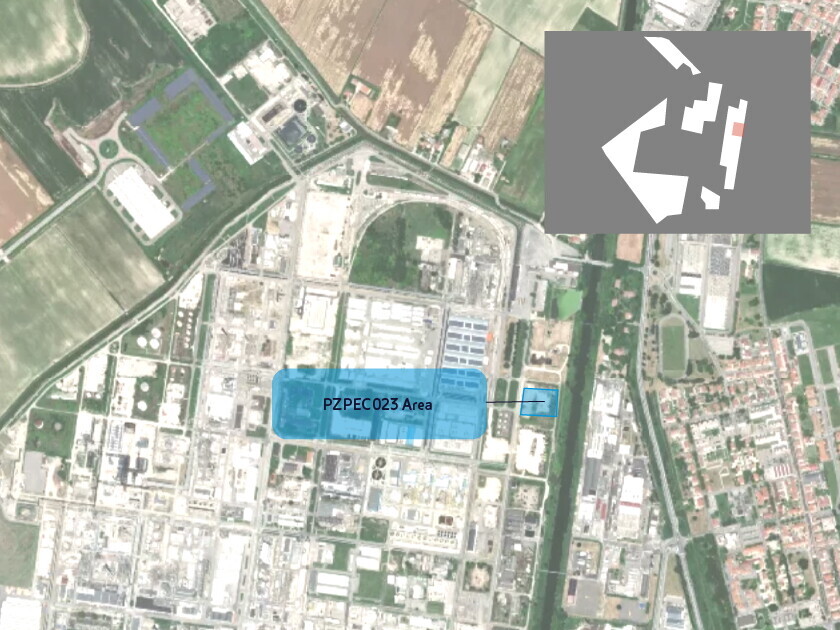
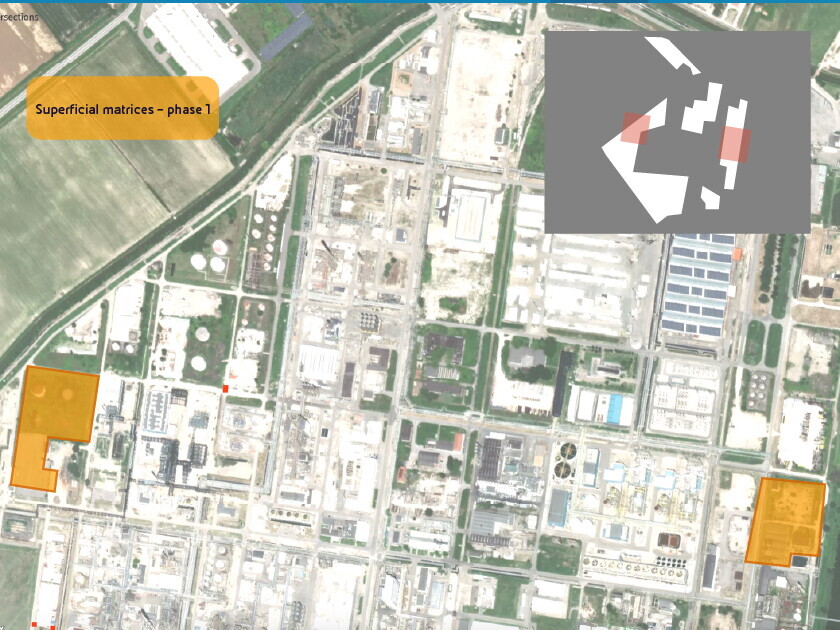
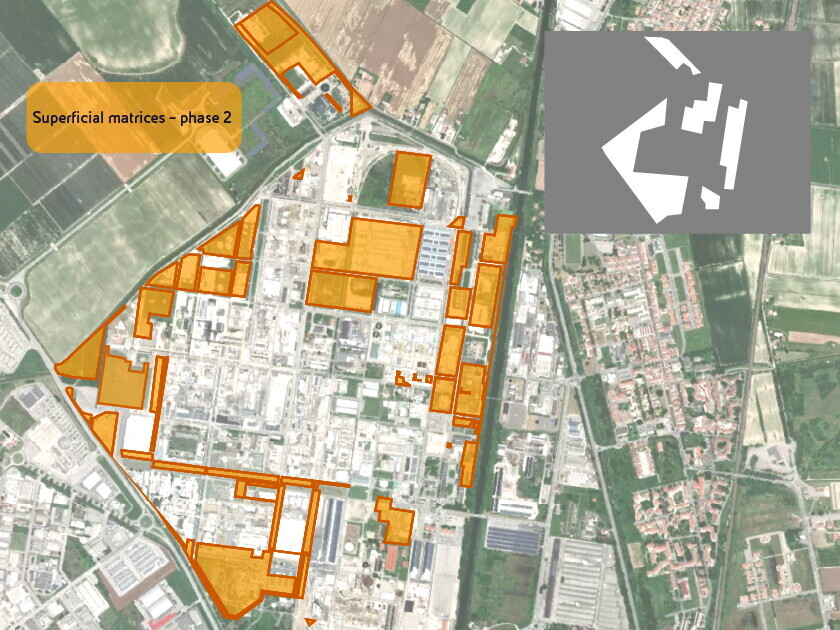
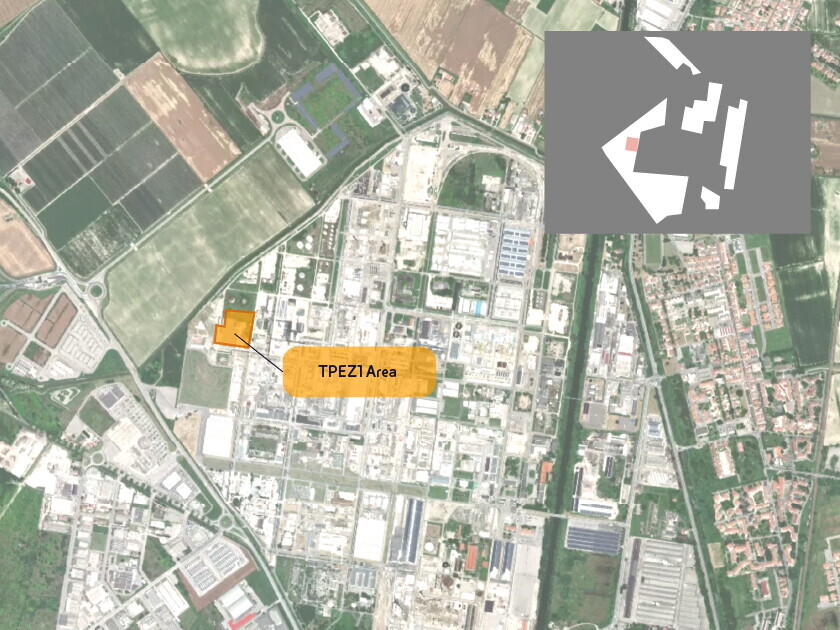
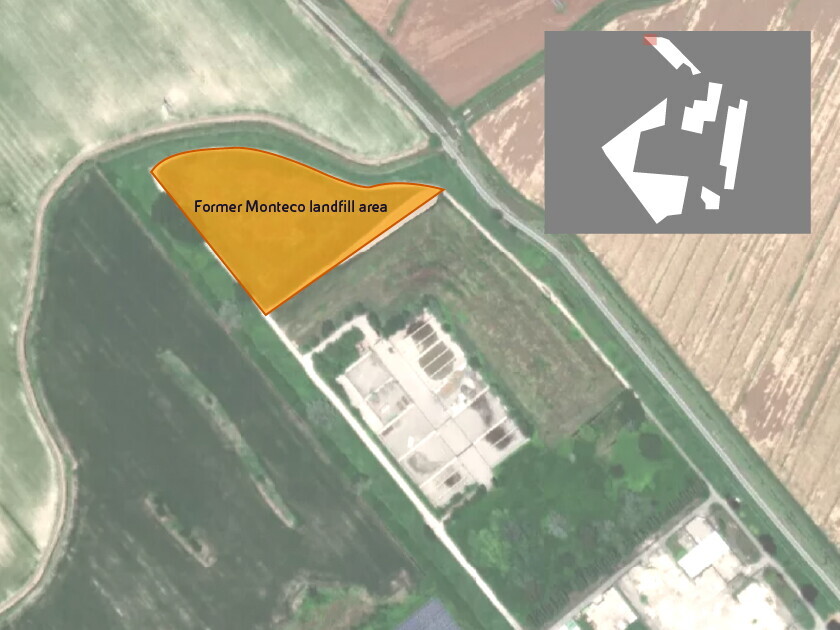
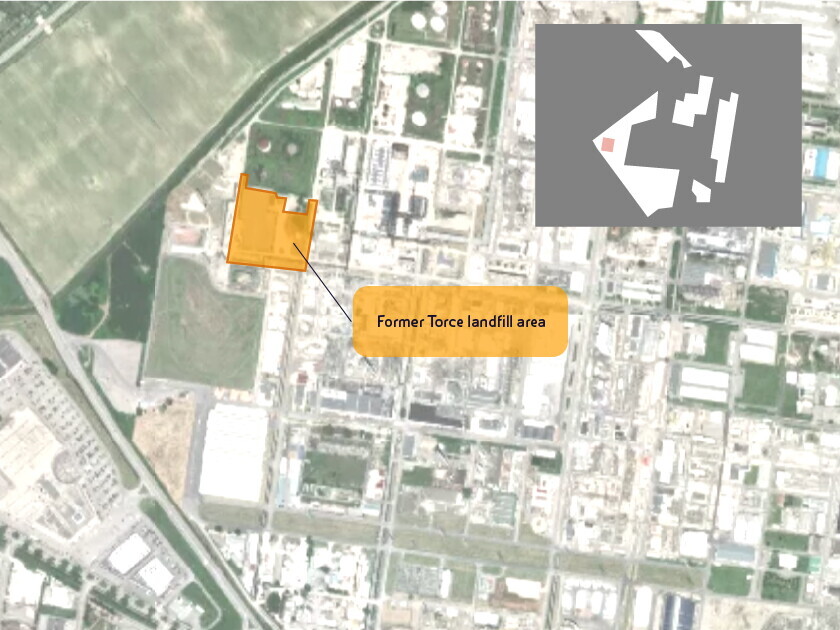
In the site, in addition to the works and extraordinary maintanance operations at the former Torce Area, already certified, and of permanent safety measures at the former Monteco landfill, undergoing certification, we are engaged in the remediation, divided into two phases, of surface matrices and of the PZPEC23 area, in addition to the decommissioning of plants and facilities.
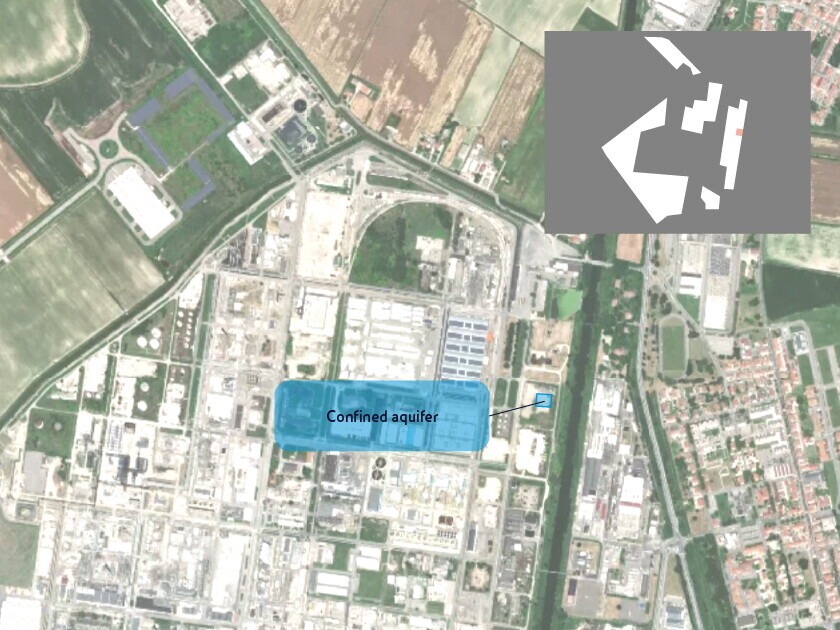
For the confined aquifer, in line with the Memorandum of Understanding signed with the co-located companies in 2006, the IFM consortium was given a mandate without representation to carry out the activities, currently underway. The operative remediation project included the construction of six pumping wells along the plume axis, channeling the water to a dedicated groundwater treatment plant (GTP), and of an in-situ bioremediation barrier. This barrier, through 80 injection points with Oxygen Release Compounds (ORC – slow oxygen release), promotes the aerobic activity of autochthonous bacteria found in the soil and aquifer. Furthermore, as Eni Rewind, we ensure hydraulic management of the impregnation water, with a pumping system located at selected points. This water is partly disposed of externally and partly treated by the IFM consortium plant, with the exception of that coming from the PZPEC23 area, which is treated in our own groundwater treatment plant.
At Ferrara, we are involved in the trial phase for the European project Nymphe – promoted and founded by the Horizon Europe Program for 2021-2027 – aimed at developing innovative strategies for the bioremediation and revitalisation of contaminated sites.

Achievements and highlights
Field trials to promote and validate innovations in remediation
For years, the Ferrara site has been a key player in the testing and validation of innovative and sustainable technological solutions through research projects launched with the support of Eni R&D or funded by the EC.
The e-limina® method for the bioremediation of the intermediate aquifer
The PZPEC023 area in the Ferrara site, covering approximately 4.5 hectares, is characterised by the presence of an intermediate aquifer between the surface aquifer and the confined one. Given this hydrogeological peculiarity, we submitted a project for the application of an in-situ bioremediation technology, identified using the "e-limina®" method. This methodology, developed by Eni, enables to establish the natural biodegradation of contaminants already present in environmental matrices. Following its application in the area, Enhanced Reductive Dechlorination (ERD) was proposed and implemented: through the injection of organic compounds (sodium lactate) into the 45 wells of the area, the oxidative action of in-situ bacteria was used to facilitate the biological biodegradation of contaminants. At the beginning of 2021, we completed the injection activities and implemented a monitoring plan with quarterly campaigns. The report submitted to the authorities highlighted a significant and constant decreasing trend in contamination. The last two monitoring campaigns required have been completed as well and we will share the findings with the relevant authorities.
The NYMPHE Project for sustainable remediation
Since 2024, at the Ferrara site, we are conducting a trial phase for the European research project called “Nymphe” (New sYsteM-driven bioremediation of Polluted Habitats and Environment). The project aims to develop innovative strategies for the bioremediation and revitalisation of contaminated sites by leveraging the combined application of microorganisms able of degrading mixtures of different pollutants. Activities will be completed by December 2026.
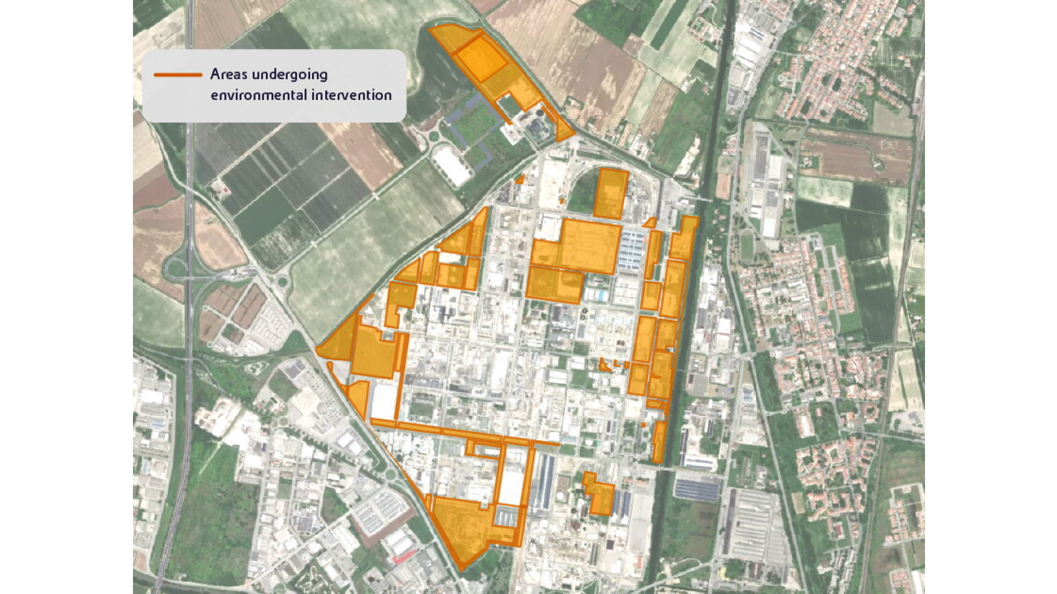
Status of the environmental process
The administrative procedures for the environmental activities in the areas owned by Eni Rewind concluded with the issuing of resolutions for all the remediation projects submitted, which are in part completed and certified.