
Remediation technologies
We design solutions in agreement with all stakeholders while respecting the environment.
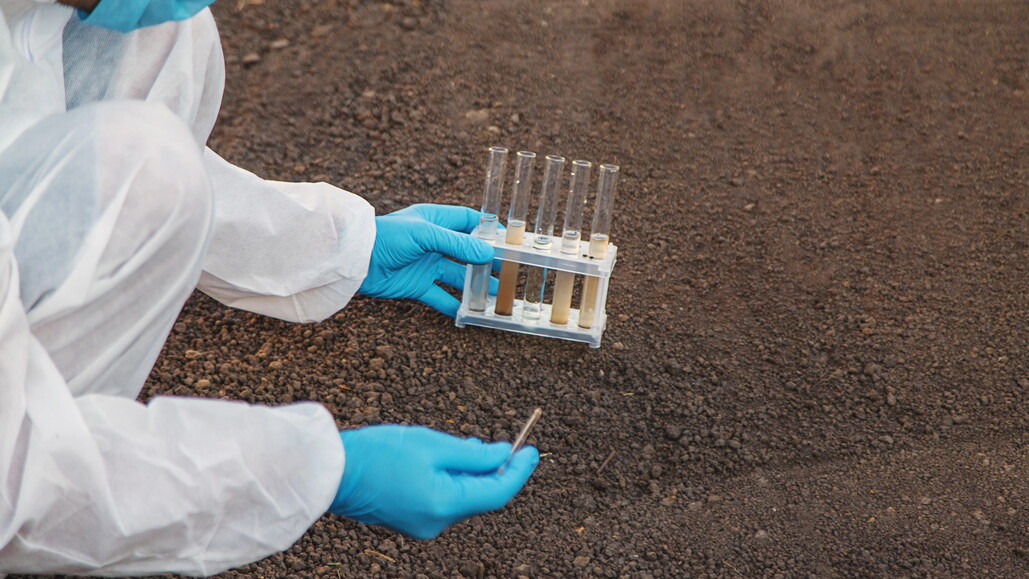

What is sustainable remediation and why we promote it
Integrating sustainability into remediation interventions includes identifying the best solutions in terms of environmental, social and territorial impact. Our aim is to enable the full involvement of stakeholders in the decision-making process, while ensuring compliance with the following fundamental principles:
- protection of human health and of the environment
- removal of contaminants from groundwater and soils with particular attention to their recovery and reuse
- adoption of innovative and sustainable technologies in terms of environmental, social and economic impact
- valorisation of the remediated areas from the design phase in line with territorial planning
- carbon footprint reduction in remediation activities.
Types of remediation interventions
Recovery techniques
The handbook of remediation technologies
Our Handbook
An overview of the best remediation technologies for a contaminated site (Italian Only).
Research in service of innovation
Developing increasingly innovative and eco-friendly technological solutions is a strategic priority for Eni Rewind. Addressing the critical issues related to methodologies of interventions and promoting integrated management requires advanced technical and scientific skills able to support the testing of new technologies and the implementation of the most promising ones. In this perspective, research and development play a central role, with the aim of constantly improving environmental sustainability, operational effectiveness, energy efficiency and safety of interventions. Research at Eni is mainly conducted through two world-class structures: the Renewable, New Energies and Material Science Research Center Novara and the Natural Resources research Center in San Donato Milanese. These structures are flanked by a solid network of collaborations with universities and research centres, both Italian and international, a pivotal knowledge and innovation asset. Academic partners include the Polytechnic University of Milan, the Polytechnic University of Turin, the Sapienza University of Rome, the Ca' Foscari University of Venice, the Alma Mater Studiorum of Bologna, the National Research Council (CNR) and prestigious international institutions such as the Massachusetts Institute of Technology (MIT). These synergies aim to foster responsible technological development, accelerating the passage of the most advanced solutions from laboratory to field application. The goal is to reduce the gap between research and concrete application, translating scientific innovation into real environmental remediation and waste management projects.
Technologies and innovative Eni methodologies
State-of-the-art solutions for the sustainable remediation of contaminated matrices, that guarantee efficiency and respect for the environment.
E-hyrec® and e-lorec® devices
In the sites where we operate, the implementation of the e-hyrec® and e-lorec® automatic devices for the selective removal of hydrocarbons from contaminated groundwater continues. The heart of the e-hyrec® technology consists of a hydrophobic filter (patented by Eni) capable of separating and extracting from the aquifer only the amount of contaminant (LNAPL – Light Non Aqueous Phase Liquid), reducing to virtually zero the quantities of water and waste sent for disposal while significantly decreasing the time needed to remove the supernatant from the water table. Compared to traditional systems, e-hyrec® technology guarantees faster, more effective and efficient groundwater remediation, making an important contribution to the protection and preservation of water resources. Over the course of the past years, more than 60 units were installed at national level, both at Eni and third-party customer sites, allowing to recover about 1,500 kilolitres of oil as of December 31, 2025 and avoiding the disposal of about 6,000 tons of water as waste. In 2025, a “carriageable” version of e-hyrec® was developed to enable its installation in those areas affected by vehicle traffic or with limited space.
The e-lorec® (eni lower-placed hydrocarbon recovery) technology involves the removal of DNAPL (Dense Non-Aqueous Phase Liquid, which are the denser hydrocarbons accumulating in the lower layers) subnatant from groundwater. Over the course of 2025, we installed around 30 devices in several Eni sites and recovered around 10,000 litres of subnatant. Today we offer on the market an integrated rental and management service for e-hyrec® and e-lorec® devices that include environmental engineering, environmental laboratories and project management services. Both devices can be powered by photovoltaic panels.