Our environmental activities at Pieve Vergonte
We are carrying out one of our most challenging remediation projects that will engage us for the next years.
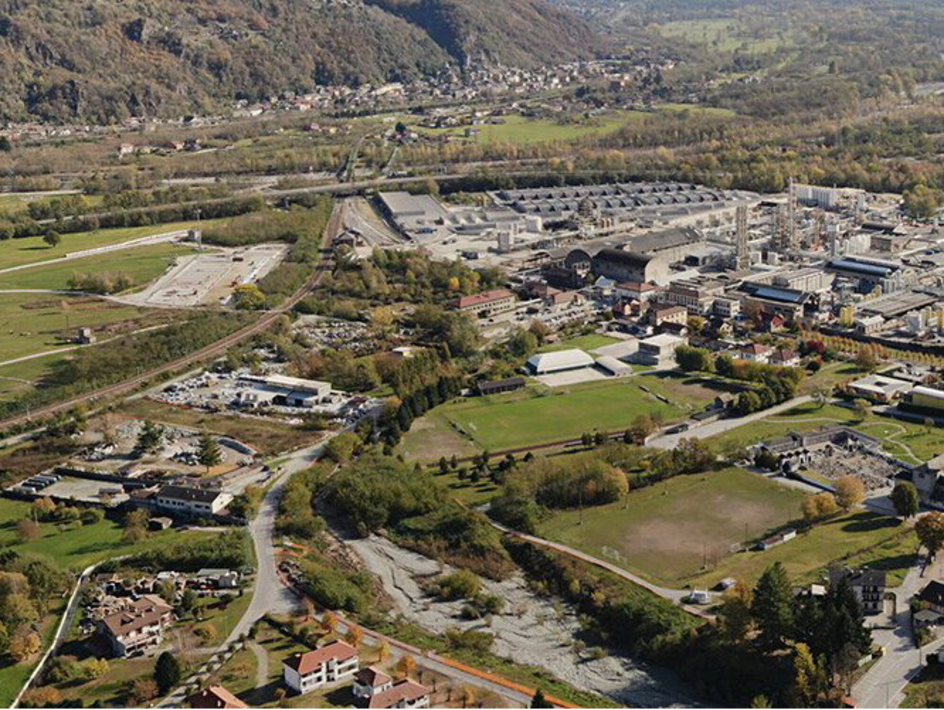

Pieve Vergonte, our commitment for the requalification of the site
Pieve Vergonte is one of Italy's oldest production sites, nestled between the Piedmont Alps and Lake Maggiore in the Ossola Valley. Since 1915, the small farming town has been at the forefront of a century of industrialisation. Its origins are linked to the Chimica Dott. Vitale company, which produced chlor-alkali, sulfuric acid, and fertilisers, and later to other activities to support the war industry. Over time, DDT and chlorine derivatives were also produced. Eni has been operating in Pieve Vergonte since 1982, with the acquisition by law of the Sir Rumianca group through its subsidiaries Anic and subsequently Enichem Synthesis, as part of the site industrial rescue operation ordered by the State. The first environmental works date back to 1995, with the beginning of environmental investigation of the soil and groundwater, which were subsequently included into the Characterisation Plan that was approved in 2003.
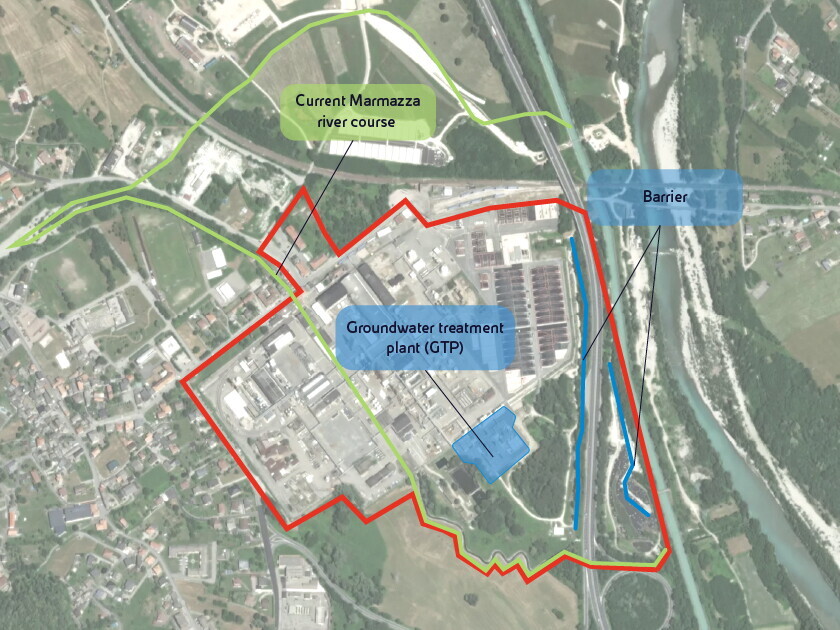
Afterwards, emergency safety measures were implemented, the decommissioned facilities were demolished, a barrier for the site's hydraulic containment was constructed, and the groundwater treatment plant (GTW) was upgraded.
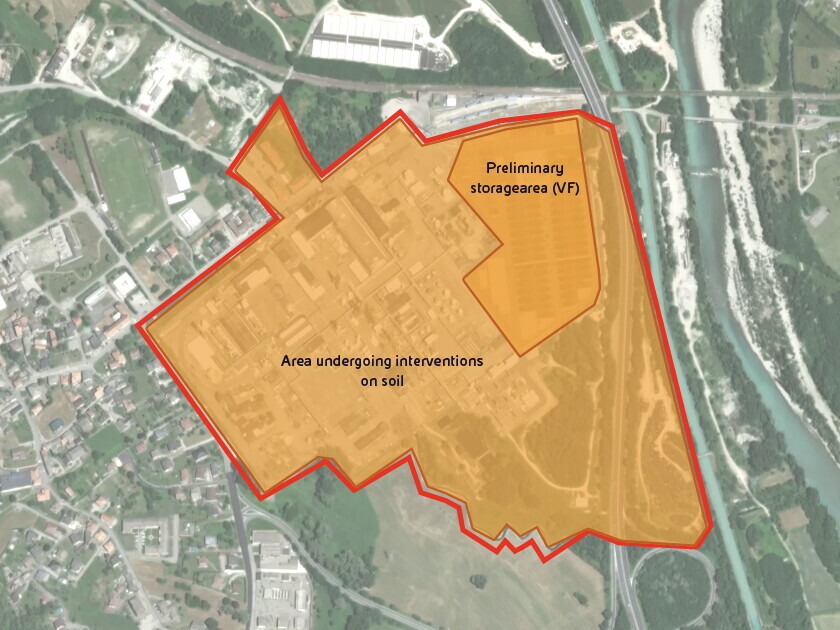
Today, the productive area includes chlor-alkali plant and the chlor-aromatic lines, managed on a leasehold basis by the Esseco Group, which spreads across 20 hectares, while the remaining decommissioned areas occupy around 3.6 hectares. Eni Rewind, as the owner of inner and outer areas within the complex for a total of 37 hectares, is carrying out soil and groundwater operations that include challenging hydraulic safety measures like moving a riverbed as well as bank and river defense works.
As of 31 December 2025, we have incurred environmental costs amounting to €296 million.
Pieve Vergonte: key elements

Sustainable and circular solutions to preserve soil resources
For the remediation of the site’s soil, we favor sustainable and circular solutions that include on-site technologies to minimise soil movement and enable its recovery.

Water conservancy
At the site, we manage groundwater remediation with a hydraulic barrier consisting of 40 pumping wells and a water treatment plant among the largest in Europe with a capacity of 1,250 m³/h.
Pieve Vergonte at a glance
 Location: Italy, Piedmont
 Start of the environmental interventions: 1995
Pieve Vergonte past and present
Site history.
Esseco Group enters the site
Esseco Group takes over Hydrochem Italia's productions, managing the chlor-alkali plant and the chlor-aromatic lines still active.
Closure of the DDT, Chloral and chlorosulfonic acid plants
Once the DDT plant was closed, followed by chloral and chlorosulfonic acid lines, residual productive activities were sold, with surface rights on the areas, to Tessenderlo, then to Hydrochem Italia.
Start of the first environmental interventions at the site
The first environmental interventions date back to 1995 with the start of soil and groundwater environmental investigations, which were then included in the Characterisation Plan approved in 2003.
Transfer by law of production activities to Anic
The productive activities were transferred to Anic (Eni group) pursuant to law n. 784/80 and later to EniChem Synthesis (1984).
The plant ownership goes to Sir-Rumianca
The plant is first transferred to the Snia company (1920) and then to the SIR-Rumianca group (1924).
Establishment of the industrial site
The plant was built between 1915 and 1920, with the commissioning of an electrochemical plant. At the time, the chemical company Dott. Vitale produced chlor-alkali, sulfuric acid, and fertilisers.
Our activities at Pieve Vergonte
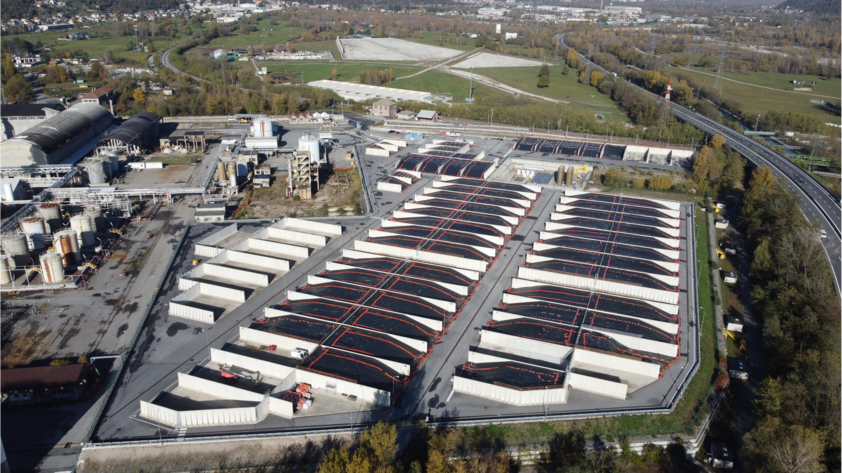
The Pieve Vergonte Site of National Priority
The restoration of the Marmazza river to its natural course. A challenging project meant to make history in environmental engineering in Italy.
At the Pieve Vergonte site, we are carrying out one of the most challenging and complex projects: the restoration of the Marmazza river to its natural course. This operation is propaedeutic to soil remediation activities, as it prevents the risk of flooding at the site and surrounding areas in the event of heavy rainfall. This impressive hydraulic work concerns a stretch of the river that is over 1km long, diverted into the site in 1918 to meet the water needs of industrial activities. Cutting-edge civil engineering technologies will be deployed to overcome the riverbed's interference with the Sempione highway, the Gottardo railway and the hydroelectric canal, ensuring the continuity of essential, uninterruptible services. For the safety of the area, the Toce river embankments will also be restored and reinforced at and downstream from the Marmazza river's inflow point.
Achievements and highlights
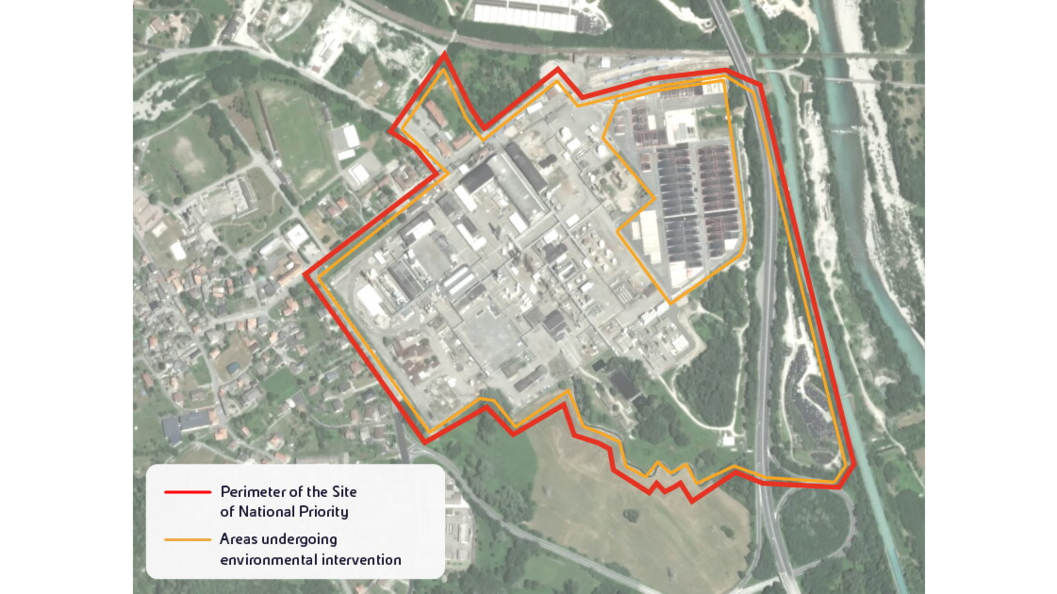
Status of the environmental process
The operative remediation project for the site was authorised in 2013. In 2018, the company submitted a project variant that was later divided into two phases: Phase 1 was approved in 2024, the request regarding Phase 2 will be transmitted for approval by December 2025.