
Our environmental interventions in Crotone
We are engaged in a complex environmental remediation project that involves the excavation and handling of approximately 1 million tons of waste.
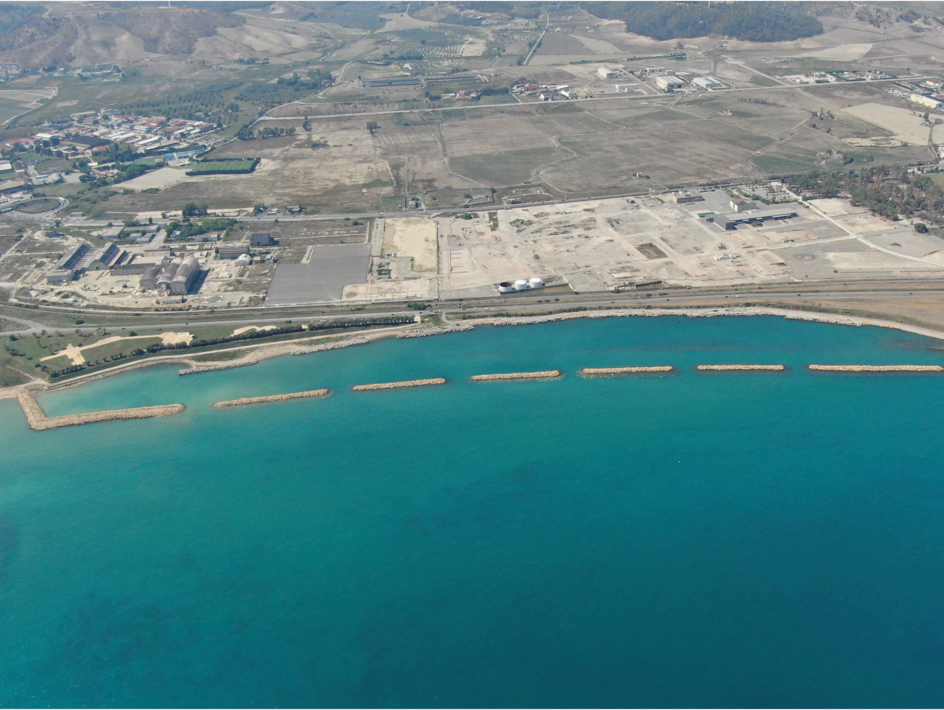

A long and complex environmental remediation process
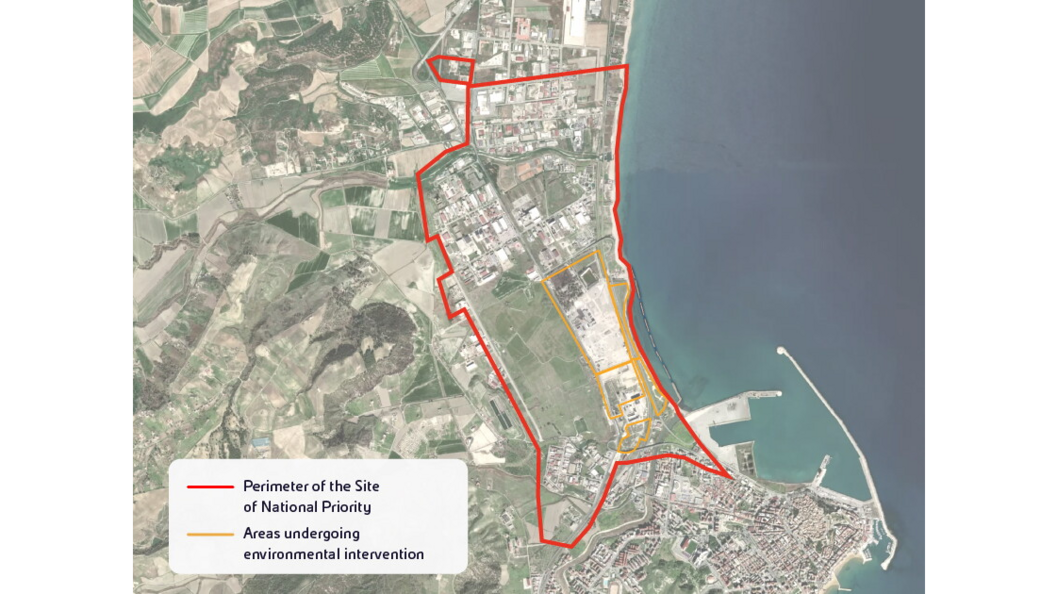
The land owned by Eni Rewind within the Site of National Priority of Crotone, Cassano, and Cerchiara includes the former Pertusola, Agricoltura, and Fosfotec areas, as well as the two former seafront landfills – Pertusola (known as Armeria) and Fosfotec (known as Farina Trappeto) – for a total extension of approximately 70 hectares.
The Crotone industrial site was established in the 1930s, with zinc production by the Pertusola Sud company, and fertilisers and detergents by Montecatini (former Agricoltura and former Fosfotec plants), later incorporated into Montedison. In the 1990s, it was conferred to Eni by decree when it was a state-owned company and following the Enimont operation. Enichem, after managing the closure and demolition of the production facilities, began safety measures interventions and remediation activities on the site. At present, as Eni Rewind, we have completed all the feasible environmental interventions envisaged in the approved projects. Specifically, we have completed the hydraulic barriers activities for the entire site, the topsoil removal in sections of the former Agricoltura and Pertusola areas, the breakwaters to protect the remediation site areas, and the preparatory excavation activities. Since June 2025, we have begun excavation activities to remove material from the former Pertusola landfill. To date, we have spent approximately 250 million euros for environmental activities at the Crotone site. In addition, approximately 70 million euros were paid following the 2012 ruling by the Court of Milan on the environmental damage liability action brought by the Ministry of the Environment towards Enichem, as successor to the Pertusola company.
Since 2023, with the Province of Crotone identifying Edison as responsible for the site's contamination (with the exception of Pertusola Sud), we have also been operating under a mandate to carry out activities in the former Agricoltura and former Fosfotec areas, as well as in the former Sasol area, bordering the Eni Rewind site.
Crotone at a glance
 Location: Italy, Calabria
 Start of the environmental interventions: 1995
Crotone past and present
Site history.
The Province of Crotone identifies those responsible for contamination
The Authority holds Edison 100% liable for historical contamination of the ex Fosfotec landfill and around 95% of the ex Agricoltura, Fosfotec, and Sasol assets; Eni Rewind holds the remaining shares.
Environmental responsibility to Enichem for the former Pertusola area
The Court of Milan attributes responsibility for the environmental damage to Enichem, as successor to Pertusola Sud, sentencing it to carry out the remediation and to pay financial compensation.
Start of the environmental interventions
Once the Pertusola activity had ceased, Enichem began the safety measures activities and the planning of the remediation interventions of the site, identified as a Site of National Priority in 2001.
Productive plants closure
Between 1991 and 1999 Eni managed the closure of production plants, first of the former Montedison ones and later the former Pertusola Sud ones.
Montedison industrial activities are transferred to Eni
Starting in 1991, following the Enimont operation, the former Montedison areas became property of Enichem.
Pertusola Sud industrial activities are conferred to Eni by law
Pertusola Sud, following the CIPI resolution of 1990, was conferred by law to Eni via its subsidiary Nuova Samim, which was incorporated into Singea in 2002 and merged into Enichem in the same year.
Conferment of Montedison industrial activities to Enimont
Montedison's plants and assets were transferred to Enimont, a JV whose capital was held 40% by Montedison, 40% by Enichem, and the remaining 20% placed on the stock market.
Former Montecatini areas and plants are conferred to Montedison
The former Montecatini areas and plants, following the company's merger by incorporation, were transferred to Montedison in 1966.
Establishment of the Crotone industrial hub
With the start of production by Pertusola (zinc, metals) and Montecatini (fertilisers in the ex Fosfotec area and detergents in the ex Agricoltura areas), the Crotone industrial site was established.
Our activities in Crotone
At the Crotone site, we manage groundwater and soil remediation interventions in former Agricoltura, Pertusola, and Fosfotec areas, as well as in the two former seafront landfills. We also carry out aquifer interventions in the former Sasol area in response to the February 2023 decree.
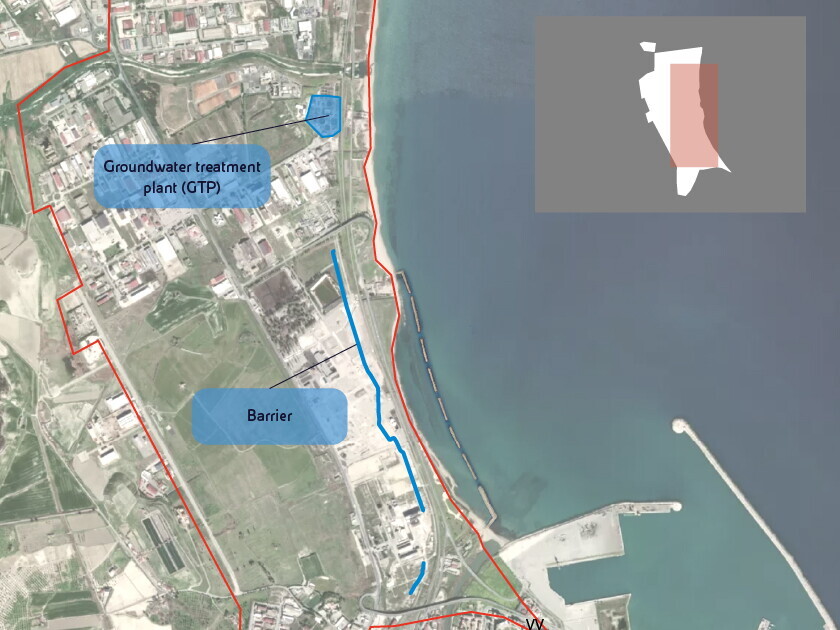
As part of the groundwater remediation project, we have progressively constructed a hydraulic barrier which, as confirmed by periodic monitoring by the relevant authorities, ensures contamination containment within the site perimeter. The extracted water is sent for treatment to the public CORAP (Regional Consortium for the Development of Productive Activities) plant.
Regarding soil remediation, we have completed the topsoil removal activities by portions of the former Agricoltura and Pertusola areas, the breakwaters to protect the remediation site areas, and the preparatory activities for the excavations required by the POB Phase 2 (2020 Decree).
The continuation of the POB Phase 2 activities consists of two lines of activities: the excavation and disposal of approximately 1 million tons of remediation waste (non-hazardous and hazardous, including TENORM and TENORM with asbestos) from the two former landfills and internal areas of the plant, and the application of in-situ remediation technologies in the inner area of Pertusola Centro Sud to reduce groundwater contamination. Regarding the latter, the March 2020 decree included the presentation of a project variation following field pilot tests conducted to clearly define the extension of the areas subject to remediation activity. It was submitted in October 2024 and is currently undergoing preliminary investigation.
The start of the excavation, initially scheduled for 2024, was delayed due to the veto placed by the Regional Single Authorising Provision (PAUR) on disposal in regional landfills, despite Crotone housing the only Italian landfill available for hazardous waste. The issuance in August 2024 of the Ministerial Decree for the Excerpt POB Phase 2 authorised hazardous waste disposal in the Crotone landfill. However, local authorities challenged the decree and warned Eni Rewind to comply with the PAUR constraint, effectively preventing the beginning of interventions.
At the beginning of 2025, we completed the scouting of foreign landfills, as required by the MASE decree of August 2024, identifying three in Sweden and one in Germany, and we started the cross-border authorisation procedures, ith the approval in May by the Swedish authorities of the export of up to 45,000 tons of hazardous waste by July 2026, in June 2025 we have begun the excavation in the former Pertusola landfill area. For the disposal of non-hazardous waste, we have signed contracts with five landfills outside Calabria, while the hazardous waste is conferred via ship and train to Sweden.
This option can only be complementary to the use of the Crotone landfill, given the logistical complexity of delivering waste abroad, which could lead to construction site shutdowns, as well as the risk that notifications will not be renewed starting in May 2026, also for the implementation of EU Regulation 2024/1157, which imposes restrictions on the traffic of waste within Europe and to non-EU countries.
Following the decision of the Calabria Regional Administrative Court in August 2025 annulling the 2024 Decree, a new ministerial authorisation process is underway. At the same time, excavation activities continue in compliance with the regulatory framework included in the latest Decree.
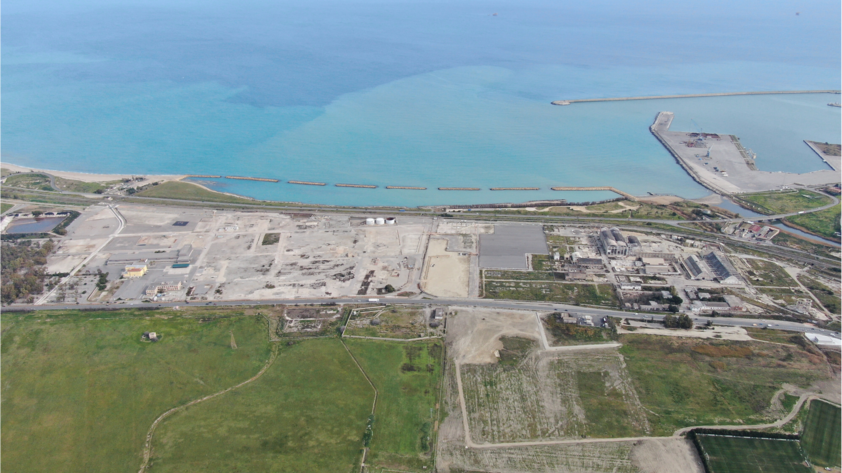
The Crotone-Cassano-Cerchiara Site of National Priority
Status of the environmental process
The environmental remediation interventions on soil and groundwater in the areas owned by Eni Rewind have been authorised with the issuance of the relevant ministerial decrees.
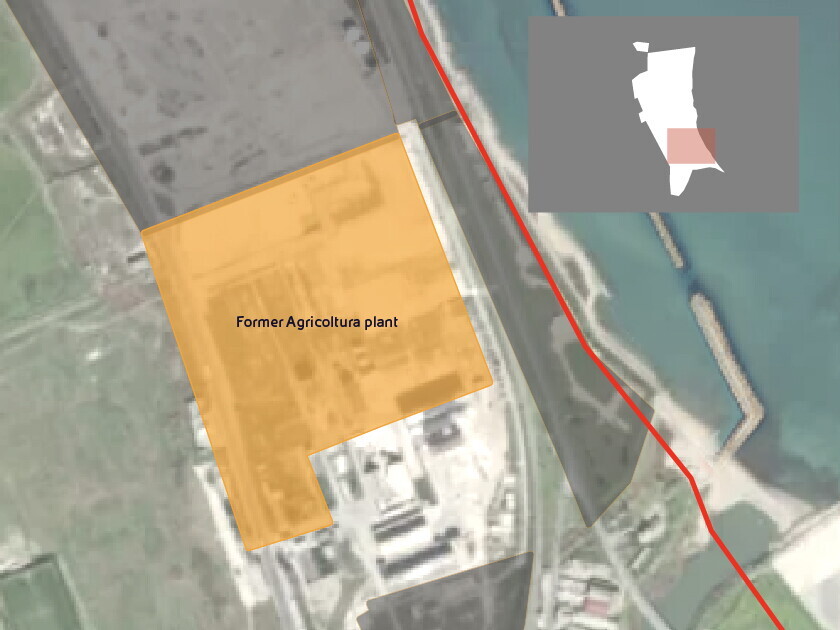

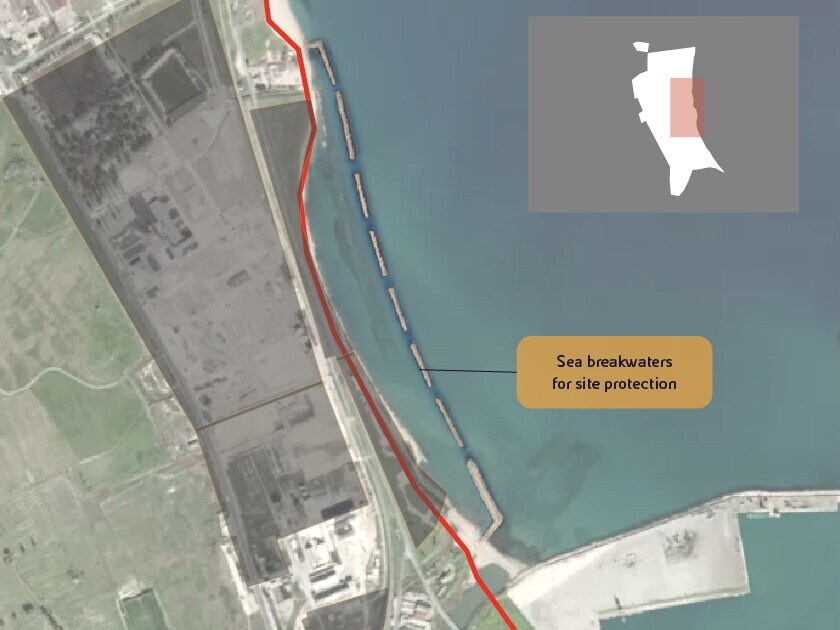
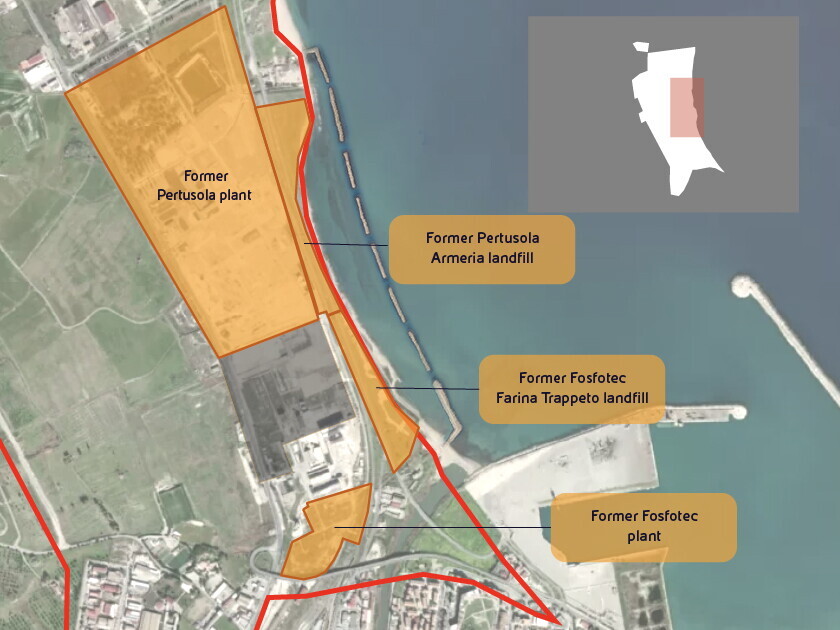
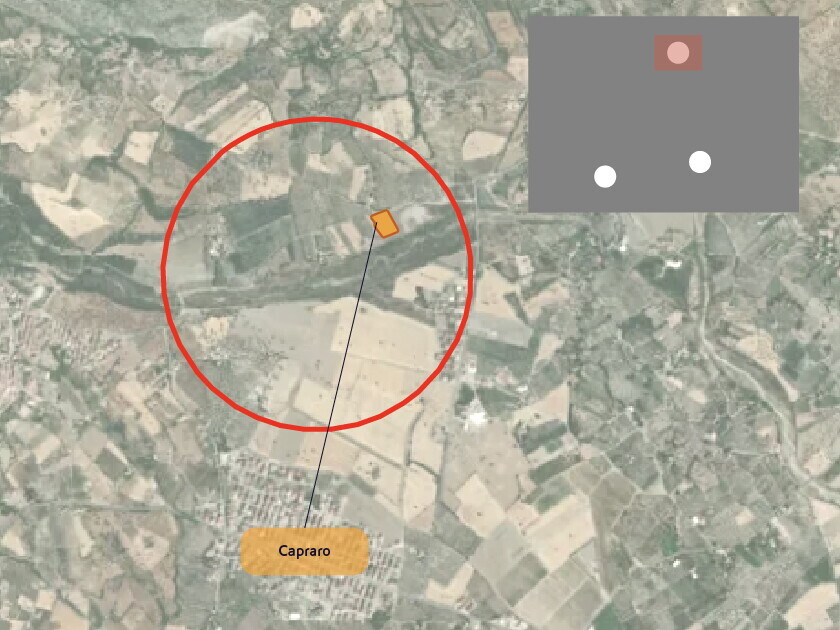
Project approved
Project approved
Project approved
Project approved
Operative Remediation Project Phase 1 - Marine protection interventions to be done ahead of time authorised by ministerial decree in 2019.
Project approved – Variant undergoing preliminary investigation
Operative Remediation Project Phase 2 – Seafront landfills and internal industrial areas autorised by ministerial decree in 2020.
Former Pertusola seafront landfill and former Pertusola Nord and Agricoltura plant project excerpt from the Phase 2 remediation project approved by decree in August 2024 and currently undergoing a new authorisation procedure after the Calabria Regional Administrative Court in August 2025 annulled it.
Variant to the Phase 2 remediation project for internal areas (Pertusola Sud) submitted in 2024, currently under preliminary investigation.
Project approved
Operative Remediation Project (POB) for environmental interventions at the sites in the Municipalities of Cassano and Cerchiara, approved by ministerial decree in April 2010.
Variant to the POB authorised by the Ministry of the Environment decree in April 2014.
Edison’s mandate for the execution of interventions
In 2023, as part of the procedure pursuant to article 244 of the Italian Consolidated Environmental Act for the areas of former Montedison origin, the Province of Crotone with an ordinance identified Edison as approximately 95% responsible for the contamination of the former Agricoltura, Fosfotec and Sasol areas, and as 100% responsible for the former Fosfotec landfill. Eni Rewind has been held responsible only for the marginal residual share, due to the years that passed since the establishment of Enimont in 1989 and the decommissioning of the former Montedison plants, which for the main part occurred before 1992. Following the ordinance, Edison has given to Eni Rewind mandate for implementing the interventions.
The complex environmental process for waste management
Retracing the history of the Crotone site's environmental procedures can help to understand the complexity and difficulty of implementing the interventions for the management of approximately 1 million tons of waste. In the 2000s, with the launch of the emergency safety measures and characterisation activities, the remediation was entrusted to a commissarial management, which ended without significant progress. For this reason, in 2008, we were recalled by the Ministry of the Environment to continue the remediation interventions. That same year, we submitted a comprehensive site remediation programme that included specific projects for both groundwater and soil matrices, including the one for the removal of the seafront landfills with the disposal of the remediation waste in a new landfill to be built in Giammiglione, in accordance with the then Regional Waste Plan. The local authorities rejected this plan. From 2009, we have submitted a number of projects that envisaged alternative solutions for the management of materials in the former landfills, and only in 2017 a convergence was reached with the Ministry, the then Commissioner and local authorities on a new project divided into two phases: phase 1 concerning the breakwaters for the protection of the remediation sites, and phase 2 for the removal of the former seafront landfills and the completion of interventions in the areas inside the plant, primarily through excavation and disposal activities. Regarding the excavation interventions, since 2017 we have spoken about and documented the lack of landfills suitable for receiving waste from the excavations envisaged in the operative remediation project (POB) phase 2. However, the Ministerial Decree of March 2020 implemented the 2019 Regional Single Authorising Provision (PAUR) with which the local authorities approved the realisation of the preliminary temporary storage facility (D15) for materials, with the requirement that the waste moved there will be disposed of outside of the Calabria region. This requirement clearly conflicts with the EU principle of proximity and self-sufficiency in waste management, especially considering the presence of a suitable landfill just a few kilometers away from the site. Specifically, the waste produced by the excavations planned for POB Phase 2 is estimated at approximately 1 million tons, half of which is non-hazardous and therefore disposable in operational landfills in other Italian regions. The remaining waste consists of around 360,000 tons of hazardous waste (which in Italy can only be disposed of in the Crotone landfill), approximately 50,000 tons containing Tenorm, and over 100,000 tons containing both Tenorm and asbestos (which can only be disposed of following a specific prefectural procedure pursuant to Legislative Decree101/2020). Following the lack of response to the requests for PAUR amendments we submitted between 2022 and 2024, the Ministry of the Environment and Energy Security has convened a new Service Conference. Despite the negative opinion of local authorities, on 1 August 2024, the Ministry issued the decree authorising the excerpt project of the POB Phase 2 for the excavation and disposal of non-Tenorm materials, enabling the disposal of hazardous waste at the Crotone landfill and at the same time requiring to begin a scouting process for facilities abroad. For the disposal of non-hazardous waste (approximately 50% of the total volume envisaged by the POB Phase 2), we have contracted five landfills outside the Calabria region. However, local authorities first challenged the MASE decree of August 2024 and subsequently warned Eni Rewind to comply with the constraint placed by the PAUR, and the Crotone landfill not to accept remediation waste. In January 2025 we completed the scouting process on landfills abroad, as requested by the MASE decree, with the identification of three suitable ones in Sweden and one in Germany, and we started the authorisation process for the cross-border procedure. In June 2025, the excavation activities began. While the non-hazardous waste is disposed of in Italian landfills outside the region, the hazardous waste, given the PAUR ban on the use of the Sovreco landfill in Crotone, is disposed of in two landfills in Sweden, for which cross-border notifications were obtained (in May and July 2025) for a total volume of up to 45,000 tons by July 2026.The August 2025 Calabria Regional Administrative Court (TAR) decision annulled the August 2024 Decree, although it confirmed that the choice on waste disposal from remediation is solely up to the responsible entity and that the PAUR restriction can be reformed in a new Decree. The Ministry has therefore convened a Service Conference in August 2025 to define the new authorisation process (currently underway). Given both the environmental impact and the risk of delays related to distance and complex intermodal logistics and, above all, the impossibility of guaranteeing the continuation of remediation excavations following the entry into force of the EU Regulation prohibiting the export of waste in May 2026, it remains necessary to overcome the restriction on the disposal of waste outside the region.At the same time, in June 2025, we started new scouting activities to identify disposal facilities for TENORM waste both in Italy and abroad. The search, however, confirmed the lack of suitable destinations for the disposal of such materials. We have therefore communicated the updates to all relevant authorities and requested a meeting of the prefectural advisory commission to evaluate possible management solutions.
Figures and highlights
The Understanding for legality
In 2018, we signed the understanding for legality, an agreement aimed at preventing organised crime from infiltrating remediation interventions in Crotone. The document establishes a control system on contracts and subcontracts, and continuous monitoring of worksites by law enforcers coordinated by the Prefecture. In addition to Eni Rewind, the agreement was signed by the Prefect, the Regional Councilor for the Environment, the mayor, representatives of local trade unions, Confindustria, Confapi, Ance, and the Chamber of Commerce.
Our activities in Cassano and Cerchiara
Within the Crotone-Cassano-Cerchiara Site of National Priority (SIN), although we are not owners of the land, we carried out remediation activities at three unauthorised landfills located in the province of Cosenza, in Chidichimo and TrePonti, in the municipality of Cassano allo Ionio, and in Capraro, in the municipality of Cerchiara di Calabria. The landfills contained production waste from the Pertusola Sud plant in Crotone, which was permanently closed in 1999. Following the approval by ministerial decree of the operative remediation project for the three landfills, between 2010 and 2011 we removed soil mixed with zinc ferrites and disposed of it in authorised external landfills. We later completed the morphological recovery and final restoration with plants. Between 2015 and 2016, Arpa Calabria issued the test validation for all three areas and in 2016 the Province of Cosenza issued the certification of completed remediation.